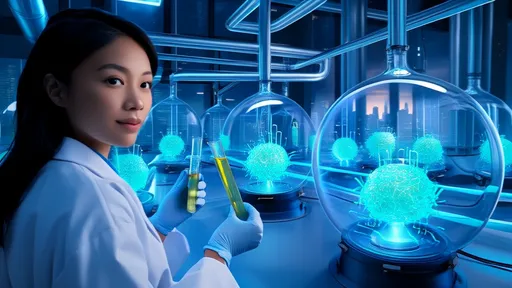
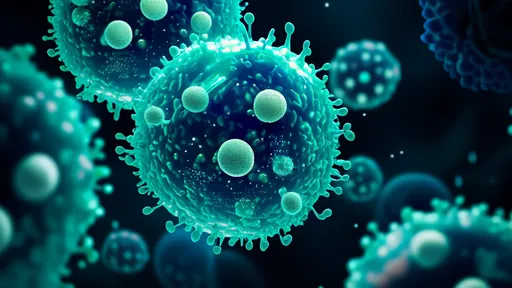
In a groundbreaking development that reads like science fiction, researchers are pioneering mitochondrial transplantation across species barriers, effectively creating stem cells with camouflaged energy factories that evade immune detection. This revolutionary approach could redefine regenerative medicine, organ transplantation, and our understanding of cellular compatibility.
The mitochondria, often called the powerhouse of the cell, have long been recognized as essential organelles responsible for energy production. However, their role extends far beyond ATP generation. These ancient bacterial descendants carry their own DNA and possess surface markers that can trigger immune responses. When transplanting cells or organs between species—a process known as xenotransplantation—these mitochondrial signatures become critical barriers to success.
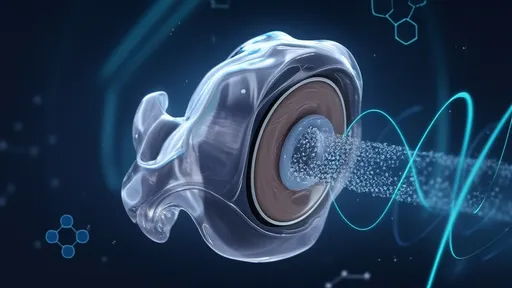
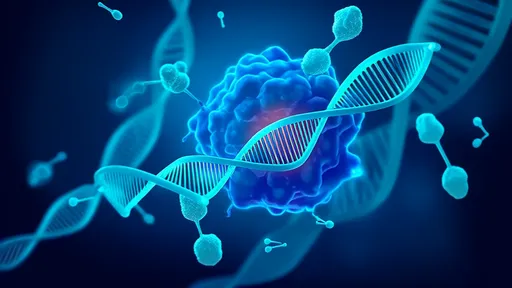
Scientists have now developed what they term "immunocamouflage" techniques for these cellular power plants. By transplanting mitochondria from one species to another and modifying their surface characteristics, researchers can create hybrid cells that appear native to the host environment. The process involves carefully extracting mitochondria from donor cells, modifying their outer membranes to display recipient-specific markers, and introducing them into stem cells that need enhanced energy capabilities.
Stem cells, with their remarkable ability to differentiate into various cell types, represent particularly promising candidates for this technology. However, their therapeutic potential has been limited by several challenges, including immune rejection and insufficient energy production when transplanted. The new mitochondrial transplantation approach addresses both issues simultaneously. By providing stem cells with mitochondria that match the host's immunological profile, these engineered cells can operate undetected by the immune system while boasting enhanced metabolic activity.
The implications for regenerative medicine are profound. Imagine being able to create universal donor stem cells that could be transplanted into any patient without fear of rejection. Patients suffering from mitochondrial diseases could receive healthy, compatible mitochondria. Organ transplantation could overcome donor shortages through successfully modified animal organs. The technology even holds promise for combating age-related cellular degeneration by revitalizing cells with young, efficient mitochondria.
Research teams across multiple institutions have reported successful experiments in animal models. In one notable study, mouse stem cells receiving engineered human mitochondria demonstrated normal function while evading immune detection in human cell cultures. The modified mitochondria not provided adequate energy but also displayed human-specific surface proteins that prevented immune recognition. This cross-species compatibility achievement marks a significant milestone toward clinical applications.
The technical process involves sophisticated genetic and protein engineering. Scientists identify key mitochondrial membrane proteins that trigger immune responses and use various techniques to modify or replace them with compatible versions. Advanced delivery methods ensure the transplanted mitochondria properly integrate with existing cellular networks. The modified mitochondria must not only avoid immune detection but also successfully communicate with their new cellular environment and coordinate with existing mitochondrial populations.
Despite the exciting progress, researchers caution that significant challenges remain. The long-term stability of transplanted mitochondria requires further study, as does the potential for unexpected immune reactions over time. Ethical considerations surrounding cross-species cellular modifications continue to be discussed within scientific and bioethics communities. Regulatory pathways for such innovative therapies will need careful development to ensure safety while encouraging medical advancement.
Looking forward, the convergence of mitochondrial transplantation with other emerging technologies like CRISPR gene editing and advanced biomaterials could accelerate progress. Researchers are exploring combination approaches that address multiple barriers to successful cell transplantation simultaneously. The ultimate goal remains clear: creating universally compatible cellular therapies that can treat a wide range of diseases without triggering harmful immune responses.
As this field advances, it may fundamentally change how we approach cellular medicine. The ability to customize cellular components across species boundaries challenges traditional biological paradigms while offering unprecedented therapeutic possibilities. While much work remains before clinical application, the successful demonstration of immunocamouflaged mitochondrial transplantation represents a remarkable step toward a future where organ rejection becomes obsolete and personalized regenerative therapies become commonplace.
The scientific community continues to monitor these developments with great interest, recognizing that each breakthrough brings us closer to revolutionizing medical treatment. As research progresses, we may witness the emergence of entirely new approaches to disease treatment based on this sophisticated cellular engineering. The mitochondria, once simply considered energy producers, are now taking center stage in one of the most exciting areas of medical innovation.
In the shadow of soaring urban landscapes, a silent crisis brews. Electronic waste, or e-waste, represents one of the fastest-growing waste streams globally, a byproduct of our relentless technological advancement. Discarded smartphones, laptops, and countless other devices form mountains of refuse, often laced with hazardous materials. Yet, within this modern-day ore lies a fortune in precious metals—gold, silver, platinum, and palladium—traditionally extracted through energy-intensive and environmentally damaging pyrometallurgical processes. A paradigm shift is quietly unfolding within the realm of urban mining, moving from the fiery furnaces of the past to the biological vats of the future. This is the story of biohydrometallurgy, a green revolution harnessing the unlikeliest of allies: microorganisms.
In the intricate ballet of nature, few phenomena capture the essence of collective optimization as vividly as the flight of a honeybee swarm. Recent interdisciplinary research, merging entomology, fluid dynamics, and energy systems engineering, has begun to decode the sophisticated aerodynamic principles that govern this mass movement. It is a story not of simple aggregation, but of a highly evolved, energy-efficient transit system perfected over millennia.
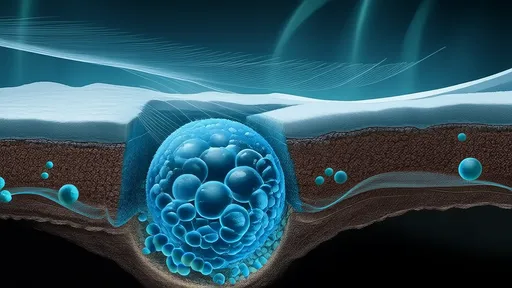
In the frigid expanses of the Arctic and within the deep ocean sediments, a silent but potent process is underway, one that could reshape our understanding of climate dynamics. The decomposition of methane hydrates, long considered a stable component of the cryosphere, is now being scrutinized through the lens of chain reaction kinetics, revealing potential feedback loops with profound implications for global warming.
In the evolving landscape of weather modification, the intersection of nanotechnology and atmospheric science has opened unprecedented avenues for research and application. Among the most promising developments is the use of engineered nanomaterials as ice-nucleating particles, a technique that could revolutionize how humans interact with and influence cloud processes. This approach, often referred to as artificial ice nucleation engineering, leverages the unique properties of nanoparticles to enhance and control ice formation in clouds, with potential implications for precipitation enhancement, hail suppression, and climate intervention.
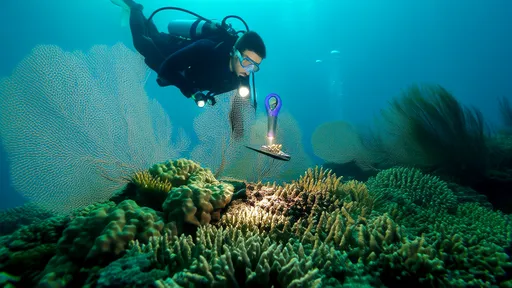
In the face of escalating ocean temperatures, coral reefs worldwide are experiencing unprecedented bleaching events, threatening the delicate balance of marine ecosystems. A groundbreaking approach merging genetic engineering with ecological restoration is now emerging: the transplantation of genetically edited heat-tolerant symbionts into bleached corals. This innovative strategy aims not merely to treat symptoms but to rebuild resilience from within the coral's very biological fabric.
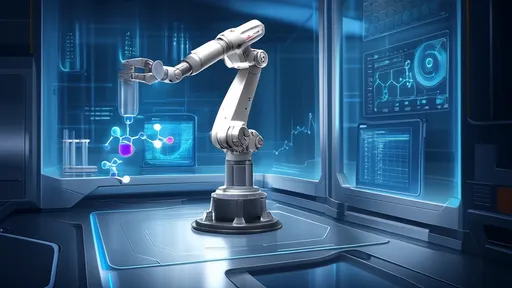
In a groundbreaking development that promises to reshape the landscape of chemical research, scientists have successfully demonstrated a fully autonomous robotic system capable of optimizing chemical synthesis pathways through Bayesian optimization. This remarkable fusion of robotics, artificial intelligence, and chemistry represents a paradigm shift in how we approach molecular discovery and synthesis planning, moving from traditional trial-and-error methods to an intelligent, self-directed experimental process.
In the rapidly evolving landscape of artificial intelligence and scientific research, a groundbreaking development has emerged that promises to reshape how we approach hypothesis generation and knowledge discovery. The scientific hypothesis generation engine, powered by an extensive knowledge graph derived from millions of academic publications, represents a paradigm shift in automated reasoning and interdisciplinary exploration. This innovative technology leverages the vast repository of human scientific knowledge, connecting disparate fields and uncovering hidden patterns that might otherwise remain obscured by the sheer volume of available information.
In the rapidly evolving field of materials science, the discovery of novel superconductors has long been a pursuit marked by both groundbreaking successes and formidable challenges. The intricate dance between theoretical prediction and experimental validation often dictates the pace of progress. Recently, a fascinating synergy has emerged at this intersection, where the power of artificial intelligence is being harnessed to accelerate the hunt for the next generation of superconducting materials. A particularly promising frontier is the application of generative adversarial networks to predict and design new topological superconductors, a class of materials that could be foundational for future quantum computing technologies.
In a groundbreaking initiative that merges cutting-edge artificial intelligence with stringent privacy protocols, a multinational consortium of healthcare institutions has launched the world's first cross-continental federated learning alliance for disease modeling. This ambitious project, spanning research centers in North America, Europe, and Asia, represents a paradigm shift in how medical AI can be developed without compromising patient confidentiality. The alliance's primary mission is to train sophisticated disease prediction models using distributed data that never leaves its original hospital or country, thereby navigating the complex web of international data protection laws while advancing global health research.
In the ever-evolving landscape of computational physics, a groundbreaking approach is reshaping how scientists tackle one of the most complex phenomena in fluid dynamics: turbulence. The integration of physical constraints into neural networks, specifically through the embedding of differential equations, is unlocking new potentials in turbulence simulation. This methodology not only enhances predictive accuracy but also ensures that the solutions adhere to fundamental physical laws, bridging the gap between data-driven machine learning and first-principles physics.
In the relentless pursuit of extending the functional lifespan of artificial joints, a paradigm-shifting innovation is emerging from the confluence of nanotechnology, biomimetics, and advanced materials science. The concept of magneto-hydrodynamic nano-lubrication represents not merely an incremental improvement but a fundamental reimagining of synovial fluid design, promising a future where prosthetic wear could be reduced to near-zero levels. This approach draws profound inspiration from biological systems, seeking to replicate and enhance the body's own exquisite lubrication mechanisms using sophisticated engineered nanoparticles.
In a groundbreaking development that promises to reshape the landscape of quantum photonics, researchers have shattered previous quantum efficiency barriers in room-temperature single-photon detection using black phosphorus-based photonic chips. This advancement not only challenges long-standing theoretical limits but also opens unprecedented pathways for practical quantum technologies operating without complex cryogenic systems.
In a groundbreaking development at the intersection of neuroscience and materials science, researchers have unveiled a revolutionary class of neural interfaces that promise to redefine our relationship with the brain. The technology, centered on liquid metal neural networks, introduces a paradigm of topological adaptive electrodes, offering an unprecedented level of integration with the brain's complex and dynamic architecture. This innovation moves beyond the static, rigid electrodes that have long been the standard, paving the way for brain-computer interfaces (BCIs) that can morph and adapt in real-time.
In the relentless quest to address global water scarcity, scientists are increasingly turning to nature's playbook for inspiration. One of the most remarkable and promising solutions emerging from this field of biomimicry is the development of aerogel-based water harvesting systems, a technology profoundly inspired by the humble Namib Desert beetle. This ingenious insect, surviving in one of the most arid environments on Earth, has mastered the art of collecting water from thin air, and its unique anatomical strategy is now paving the way for revolutionary man-made solutions.
In the rapidly evolving landscape of materials science, a groundbreaking development has emerged that promises to redefine the capabilities of photonic devices. Researchers have successfully engineered self-healing photonic crystals integrated with microfluidic channels, enabling intelligent optical performance restoration. This innovation addresses one of the most persistent challenges in photonic technology: the degradation of optical properties due to mechanical damage or environmental factors. By mimicking biological systems' ability to repair themselves, these advanced materials open new horizons for durable and maintenance-free optical applications.
The intricate dance between the nervous system and the immune response represents one of the most fascinating frontiers in modern physiology and medicine. For centuries, these two complex systems were largely studied in isolation, viewed as separate entities performing their distinct functions. However, a paradigm shift has occurred with the groundbreaking discovery of the inflammatory reflex—a direct neural circuit that monitors and modulates the body's inflammatory status. This reflex, orchestrated primarily by the vagus nerve, has unveiled a revolutionary understanding of how the brain and immune system communicate in real-time, opening unprecedented therapeutic avenues.
In the ever-evolving landscape of biomedical science, the concept of reversing cellular aging has transitioned from speculative fiction to a tangible, albeit complex, field of research. At the heart of this revolutionary pursuit lies epigenetic reprogramming, a sophisticated biological mechanism that offers a promising pathway to counteract the relentless march of time at a cellular level. Unlike genetic alterations, which involve changes to the DNA sequence itself, epigenetic modifications influence gene expression without altering the underlying genetic code. This distinction is crucial, as it provides a reversible and dynamic layer of control over cellular identity and function, making it a prime target for interventions aimed at rejuvenating aged cells and tissues.
The persistent threat of antibiotic-resistant bacteria, particularly those entrenched within resilient biofilms, represents one of the most formidable challenges in modern medicine. These structured communities of microorganisms, protected by a self-produced matrix of extracellular polymeric substances, act as fortresses, shielding bacteria from antimicrobial agents and the host immune system. Traditional antibiotic therapies often fail to penetrate these structures or effectively eradicate the embedded cells, leading to chronic, recalcitrant infections associated with medical implants, cystic fibrosis, and chronic wounds. The escalating crisis of antimicrobial resistance (AMR) demands a paradigm shift away from conventional broad-spectrum approaches toward highly precise, targeted strategies that can overcome these defenses without contributing to further resistance.
In a groundbreaking development that blurs the lines between neuroscience fiction and reality, researchers have unveiled a novel ultrasonic technology capable of noninvasively reading and writing neural activity in deep brain regions. This revolutionary approach, termed ultrasonic neurocontrol networking, represents a paradigm shift in how we interact with the brain's most intricate circuits without a single incision.
In a groundbreaking development that reads like science fiction, researchers are pioneering mitochondrial transplantation across species barriers, effectively creating stem cells with camouflaged energy factories that evade immune detection. This revolutionary approach could redefine regenerative medicine, organ transplantation, and our understanding of cellular compatibility.