In the relentless quest to address global water scarcity, scientists are increasingly turning to nature's playbook for inspiration. One of the most remarkable and promising solutions emerging from this field of biomimicry is the development of aerogel-based water harvesting systems, a technology profoundly inspired by the humble Namib Desert beetle. This ingenious insect, surviving in one of the most arid environments on Earth, has mastered the art of collecting water from thin air, and its unique anatomical strategy is now paving the way for revolutionary man-made solutions.
The Stenocara gracilipes, endemic to the Namib Desert, faces a critical challenge: with annual rainfall of less than half an inch, it cannot rely on conventional sources of hydration. Over millennia, it has evolved an extraordinary back structure to overcome this. Its shell is not uniformly smooth; instead, it is a masterpiece of micro- and nano-engineering. The beetle's wing cases, or elytra, are covered in an array of microscopic bumps. These bumps are hydrophilic, meaning they have a strong affinity for water molecules. The valleys and flat areas between these bumps, however, are coated in a waxy, hydrophobic substance that repels water.
This clever design orchestrates a daily water collection ritual. During the early morning hours, when fog rolls in from the Atlantic Ocean, tiny water droplets from the humid air condense onto the hydrophilic bumps on the beetle's back. As these minuscule droplets grow larger, they eventually reach a size where they overcome the pinning force of the bumps. They then roll down the waxy, hydrophobic channels, guided by gravity and the surface's texture, directly into the beetle's waiting mouth. This elegant, passive system provides the beetle with all the water it needs to survive.
Captivated by this natural efficiency, material scientists and engineers have sought to replicate this multi-scale structural design synthetically. The goal is to create a material that is not merely a copy but an enhancement—a surface that can outperform the beetle itself in terms of water collection rate and efficiency. The primary medium for this innovation has been aerogels, among the lightest solid materials known to humanity.
Aerogels are created by replacing the liquid component of a gel with a gas, resulting in a solid matrix of intertwined nanoparticles with immense porosity, often exceeding 90%. This nanostructured skeleton provides a colossal internal surface area, making it an ideal scaffold for water capture. The challenge, and the brilliance of the new generation of water-harvesting aerogels, lies in functionally grading this material to mimic the beetle's back. Researchers engineer the aerogel's chemistry and texture across different scales. They create hydrophilic "islands" or domains within a predominantly hydrophobic aerogel matrix, or they texture the surface with microscopic protrusions to emulate the beetle's bumps and channels.
The synthesis of these bio-inspired aerogels often involves advanced chemical processes. A common approach is the sol-gel polymerization of specific monomers or polymers, followed by a sophisticated drying technique like supercritical CO2 drying to preserve the delicate nanostructure. The hydrophilic components are typically achieved by incorporating moisture-absorbing polymers or chemicals like polyvinyl alcohol or chitosan, while the hydrophobic background is often made from silane-based compounds or other water-repelling molecules. The precise patterning of these contrasting properties is achieved through techniques like micro-molding, photolithography, or 3D printing, allowing for control from the nanometer to the millimeter scale.
The performance of these engineered aerogels is nothing short of astounding. In laboratory and field tests, they have demonstrated the ability to extract significant quantities of water from air with humidity levels as low as 15%—conditions typical of arid and semi-arid regions where water is most needed. The process is entirely passive, requiring no external energy input. At night, when temperatures drop and relative humidity rises, the aerogel's vast internal surface area condenses atmospheric moisture. As daylight returns and temperatures increase, the captured water is released from the pores and channeled along the designed hydrophobic pathways into a collection system.
The potential applications for this technology are vast and transformative. Imagine arrays of these aerogel panels installed on the roofs of homes in remote, water-stressed villages, providing a constant, renewable source of clean drinking water without the need for electricity or complex infrastructure. In agriculture, they could be used to support drip irrigation systems in deserts, reducing the reliance on rapidly depleting groundwater aquifers. They could also be integrated into the design of greenhouses in arid climates to maintain optimal humidity levels for plant growth, creating a closed-loop water system.
Furthermore, the scalability of aerogel production suggests that this technology could move from small-scale community use to larger municipal applications. Large collection farms covered with these biomimetic aerogels could potentially supplement the water supply for entire towns. The water harvested is typically very pure, as the condensation process naturally filters out many contaminants and salts, though it may require minimal treatment for biological safety, making it an excellent source for potable water.
Despite the exciting progress, challenges remain on the path to widespread commercialization. The synthesis of these advanced aerogels, particularly those with precise multi-scale functional grading, can be complex and costly compared to conventional materials. Scaling up production while maintaining the intricate nanostructure and chemical homogeneity is a significant engineering hurdle. Additionally, the long-term durability of these materials under constant exposure to the elements—UV radiation, wind, dust, and temperature fluctuations—needs to be thoroughly validated. Researchers are actively exploring ways to make the synthesis more cost-effective, perhaps by using more abundant raw materials or simplifying the manufacturing process, and are developing protective coatings to enhance the aerogels' resilience outdoors.
The development of beetle-inspired aerogel water harvesters represents a beautiful convergence of biology, material science, and engineering. It is a powerful testament to the idea that some of the most advanced solutions to human challenges are already present in the natural world, honed by billions of years of evolution. By learning from the Namib Desert beetle, scientists are not just creating a new technology; they are fostering a more sustainable and symbiotic relationship with our environment. This innovation stands as a beacon of hope, offering a promising tool in the global effort to ensure that every community has access to that most fundamental of resources: clean, safe water.
In the shadow of soaring urban landscapes, a silent crisis brews. Electronic waste, or e-waste, represents one of the fastest-growing waste streams globally, a byproduct of our relentless technological advancement. Discarded smartphones, laptops, and countless other devices form mountains of refuse, often laced with hazardous materials. Yet, within this modern-day ore lies a fortune in precious metals—gold, silver, platinum, and palladium—traditionally extracted through energy-intensive and environmentally damaging pyrometallurgical processes. A paradigm shift is quietly unfolding within the realm of urban mining, moving from the fiery furnaces of the past to the biological vats of the future. This is the story of biohydrometallurgy, a green revolution harnessing the unlikeliest of allies: microorganisms.
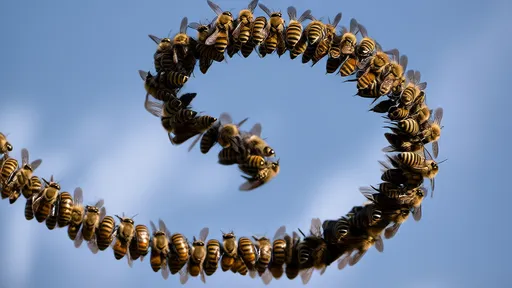
In the intricate ballet of nature, few phenomena capture the essence of collective optimization as vividly as the flight of a honeybee swarm. Recent interdisciplinary research, merging entomology, fluid dynamics, and energy systems engineering, has begun to decode the sophisticated aerodynamic principles that govern this mass movement. It is a story not of simple aggregation, but of a highly evolved, energy-efficient transit system perfected over millennia.
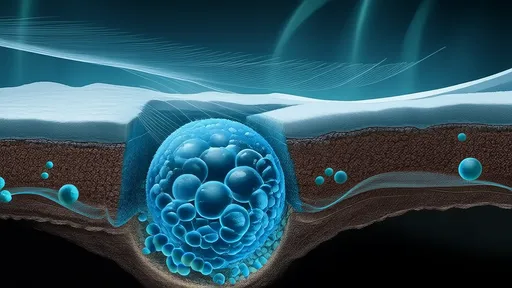
In the frigid expanses of the Arctic and within the deep ocean sediments, a silent but potent process is underway, one that could reshape our understanding of climate dynamics. The decomposition of methane hydrates, long considered a stable component of the cryosphere, is now being scrutinized through the lens of chain reaction kinetics, revealing potential feedback loops with profound implications for global warming.
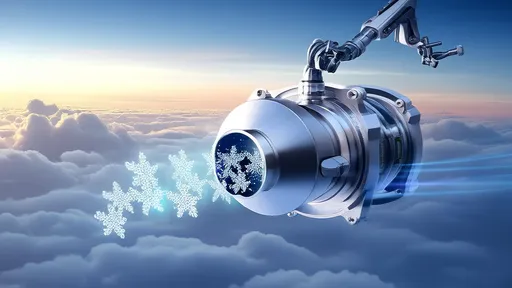
In the evolving landscape of weather modification, the intersection of nanotechnology and atmospheric science has opened unprecedented avenues for research and application. Among the most promising developments is the use of engineered nanomaterials as ice-nucleating particles, a technique that could revolutionize how humans interact with and influence cloud processes. This approach, often referred to as artificial ice nucleation engineering, leverages the unique properties of nanoparticles to enhance and control ice formation in clouds, with potential implications for precipitation enhancement, hail suppression, and climate intervention.
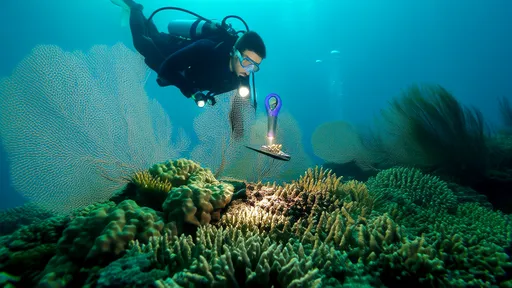
In the face of escalating ocean temperatures, coral reefs worldwide are experiencing unprecedented bleaching events, threatening the delicate balance of marine ecosystems. A groundbreaking approach merging genetic engineering with ecological restoration is now emerging: the transplantation of genetically edited heat-tolerant symbionts into bleached corals. This innovative strategy aims not merely to treat symptoms but to rebuild resilience from within the coral's very biological fabric.
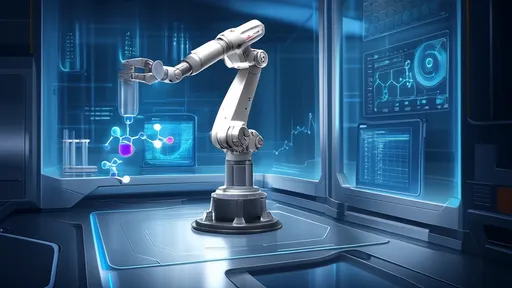
In a groundbreaking development that promises to reshape the landscape of chemical research, scientists have successfully demonstrated a fully autonomous robotic system capable of optimizing chemical synthesis pathways through Bayesian optimization. This remarkable fusion of robotics, artificial intelligence, and chemistry represents a paradigm shift in how we approach molecular discovery and synthesis planning, moving from traditional trial-and-error methods to an intelligent, self-directed experimental process.
In the rapidly evolving landscape of artificial intelligence and scientific research, a groundbreaking development has emerged that promises to reshape how we approach hypothesis generation and knowledge discovery. The scientific hypothesis generation engine, powered by an extensive knowledge graph derived from millions of academic publications, represents a paradigm shift in automated reasoning and interdisciplinary exploration. This innovative technology leverages the vast repository of human scientific knowledge, connecting disparate fields and uncovering hidden patterns that might otherwise remain obscured by the sheer volume of available information.
In the rapidly evolving field of materials science, the discovery of novel superconductors has long been a pursuit marked by both groundbreaking successes and formidable challenges. The intricate dance between theoretical prediction and experimental validation often dictates the pace of progress. Recently, a fascinating synergy has emerged at this intersection, where the power of artificial intelligence is being harnessed to accelerate the hunt for the next generation of superconducting materials. A particularly promising frontier is the application of generative adversarial networks to predict and design new topological superconductors, a class of materials that could be foundational for future quantum computing technologies.
In a groundbreaking initiative that merges cutting-edge artificial intelligence with stringent privacy protocols, a multinational consortium of healthcare institutions has launched the world's first cross-continental federated learning alliance for disease modeling. This ambitious project, spanning research centers in North America, Europe, and Asia, represents a paradigm shift in how medical AI can be developed without compromising patient confidentiality. The alliance's primary mission is to train sophisticated disease prediction models using distributed data that never leaves its original hospital or country, thereby navigating the complex web of international data protection laws while advancing global health research.
In the ever-evolving landscape of computational physics, a groundbreaking approach is reshaping how scientists tackle one of the most complex phenomena in fluid dynamics: turbulence. The integration of physical constraints into neural networks, specifically through the embedding of differential equations, is unlocking new potentials in turbulence simulation. This methodology not only enhances predictive accuracy but also ensures that the solutions adhere to fundamental physical laws, bridging the gap between data-driven machine learning and first-principles physics.
In the relentless pursuit of extending the functional lifespan of artificial joints, a paradigm-shifting innovation is emerging from the confluence of nanotechnology, biomimetics, and advanced materials science. The concept of magneto-hydrodynamic nano-lubrication represents not merely an incremental improvement but a fundamental reimagining of synovial fluid design, promising a future where prosthetic wear could be reduced to near-zero levels. This approach draws profound inspiration from biological systems, seeking to replicate and enhance the body's own exquisite lubrication mechanisms using sophisticated engineered nanoparticles.
In a groundbreaking development that promises to reshape the landscape of quantum photonics, researchers have shattered previous quantum efficiency barriers in room-temperature single-photon detection using black phosphorus-based photonic chips. This advancement not only challenges long-standing theoretical limits but also opens unprecedented pathways for practical quantum technologies operating without complex cryogenic systems.
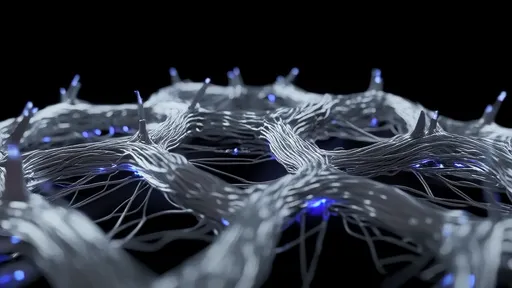
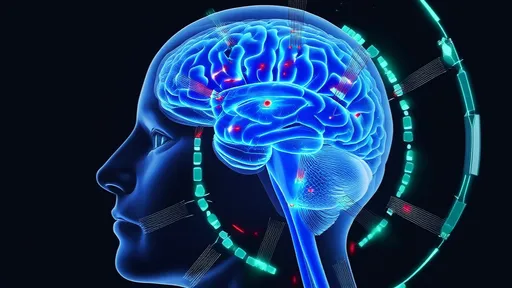
In a groundbreaking development at the intersection of neuroscience and materials science, researchers have unveiled a revolutionary class of neural interfaces that promise to redefine our relationship with the brain. The technology, centered on liquid metal neural networks, introduces a paradigm of topological adaptive electrodes, offering an unprecedented level of integration with the brain's complex and dynamic architecture. This innovation moves beyond the static, rigid electrodes that have long been the standard, paving the way for brain-computer interfaces (BCIs) that can morph and adapt in real-time.
In the relentless quest to address global water scarcity, scientists are increasingly turning to nature's playbook for inspiration. One of the most remarkable and promising solutions emerging from this field of biomimicry is the development of aerogel-based water harvesting systems, a technology profoundly inspired by the humble Namib Desert beetle. This ingenious insect, surviving in one of the most arid environments on Earth, has mastered the art of collecting water from thin air, and its unique anatomical strategy is now paving the way for revolutionary man-made solutions.
In the rapidly evolving landscape of materials science, a groundbreaking development has emerged that promises to redefine the capabilities of photonic devices. Researchers have successfully engineered self-healing photonic crystals integrated with microfluidic channels, enabling intelligent optical performance restoration. This innovation addresses one of the most persistent challenges in photonic technology: the degradation of optical properties due to mechanical damage or environmental factors. By mimicking biological systems' ability to repair themselves, these advanced materials open new horizons for durable and maintenance-free optical applications.
The intricate dance between the nervous system and the immune response represents one of the most fascinating frontiers in modern physiology and medicine. For centuries, these two complex systems were largely studied in isolation, viewed as separate entities performing their distinct functions. However, a paradigm shift has occurred with the groundbreaking discovery of the inflammatory reflex—a direct neural circuit that monitors and modulates the body's inflammatory status. This reflex, orchestrated primarily by the vagus nerve, has unveiled a revolutionary understanding of how the brain and immune system communicate in real-time, opening unprecedented therapeutic avenues.
In the ever-evolving landscape of biomedical science, the concept of reversing cellular aging has transitioned from speculative fiction to a tangible, albeit complex, field of research. At the heart of this revolutionary pursuit lies epigenetic reprogramming, a sophisticated biological mechanism that offers a promising pathway to counteract the relentless march of time at a cellular level. Unlike genetic alterations, which involve changes to the DNA sequence itself, epigenetic modifications influence gene expression without altering the underlying genetic code. This distinction is crucial, as it provides a reversible and dynamic layer of control over cellular identity and function, making it a prime target for interventions aimed at rejuvenating aged cells and tissues.
The persistent threat of antibiotic-resistant bacteria, particularly those entrenched within resilient biofilms, represents one of the most formidable challenges in modern medicine. These structured communities of microorganisms, protected by a self-produced matrix of extracellular polymeric substances, act as fortresses, shielding bacteria from antimicrobial agents and the host immune system. Traditional antibiotic therapies often fail to penetrate these structures or effectively eradicate the embedded cells, leading to chronic, recalcitrant infections associated with medical implants, cystic fibrosis, and chronic wounds. The escalating crisis of antimicrobial resistance (AMR) demands a paradigm shift away from conventional broad-spectrum approaches toward highly precise, targeted strategies that can overcome these defenses without contributing to further resistance.
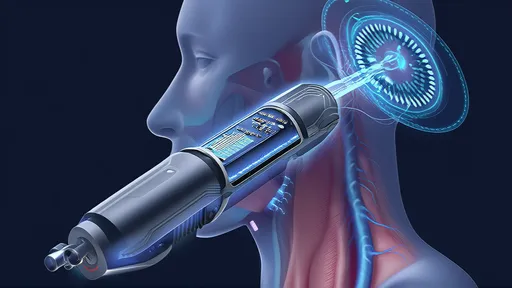
In a groundbreaking development that blurs the lines between neuroscience fiction and reality, researchers have unveiled a novel ultrasonic technology capable of noninvasively reading and writing neural activity in deep brain regions. This revolutionary approach, termed ultrasonic neurocontrol networking, represents a paradigm shift in how we interact with the brain's most intricate circuits without a single incision.
In a groundbreaking development that reads like science fiction, researchers are pioneering mitochondrial transplantation across species barriers, effectively creating stem cells with camouflaged energy factories that evade immune detection. This revolutionary approach could redefine regenerative medicine, organ transplantation, and our understanding of cellular compatibility.