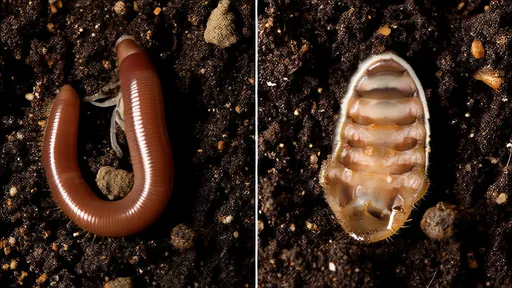
The humble earthworm, often overlooked as it wriggles through the soil, possesses one of nature's most fascinating biological capabilities: regeneration. The idea that an earthworm can be cut in half and both parts will regenerate into complete, living worms has permeated popular understanding for generations. This concept, while rooted in biological truth, is often oversimplified and misunderstood. The reality of earthworm regeneration is a complex dance of cellular biology, environmental factors, and species-specific capabilities that is far more nuanced than the common myth suggests.
At its core, regeneration is the process by which some animals can regrow lost or damaged body parts. For earthworms, which are annelids, this ability is linked to their segmented body plan. Each segment contains a suite of vital organs and nervous tissues, but the complexity and necessity of these organs vary along the length of the worm's body. The critical factor determining successful regeneration is the location of the cut. Earthworms have a region called the clitellum, a thickened, saddle-like band that is crucial for reproduction. This structure is typically located about one-third of the way down the body from the head.
The widely held belief is that if you cut an earthworm in half, you will get two worms. The scientific truth, however, is more conditional. The worm's ability to survive and regenerate depends entirely on which half retains the clitellum. The half that contains the head and the clitellum has a significantly higher chance of survival. This anterior (front) section can often regenerate a new tail. The process involves the formation of a blastema, a mass of cells capable of growth and regeneration, at the site of the wound. These cells differentiate to form the new segments, muscles, gut, and other tissues needed to create a functional posterior end.
The fate of the posterior (tail) half is far grimmer. This section lacks the crucial cerebral ganglia (a simple brain) and other vital organs concentrated in the anterior segments. While it may exhibit movement for a period of time due to remaining nerve activity, it cannot regenerate a new head. Without a mouth, brain, or digestive system, it is unable to feed or process nutrients. Consequently, the tail section will eventually die and decompose. Therefore, the notion of "two worms" is a misconception; you typically get one surviving worm that regrows a tail and one doomed tail section.
The regeneration process itself is a marvel of cellular coordination. Upon injury, specialized cells called neoblasts (or similar pluripotent cells in annelids) migrate to the wound site. These cells are undifferentiated, meaning they have the potential to become any type of cell the worm needs to rebuild itself. They proliferate rapidly, forming the blastema. Hormonal signals and genetic pathways then guide these cells to differentiate into the specific tissues—nerve, muscle, intestine, skin—required to form the missing body part. The complexity of regrowing a tail, which is less neurologically complex than a head, is why the anterior section is so much more successful.
Not all earthworm species are created equal in their regenerative prowess. Common composting worms like Eisenia fetida (red wigglers) show remarkable regenerative abilities. In contrast, the common nightcrawler (Lumbricus terrestris) has a more limited capacity for regeneration. This variation is due to differences in their genetics, biology, and even their ecological roles. A worm that lives in particularly hazardous soil, full of sharp objects or predators, may have evolved stronger regenerative abilities as a survival mechanism.
The environment plays a pivotal role in the success or failure of regeneration. A wounded worm requires optimal conditions to channel its energy into the incredibly taxing process of regrowth. The soil must be moist, as earthworms breathe through their skin and desiccation is a constant threat, especially to a vulnerable, open wound. The temperature must be within a suitable range for metabolic activity. Perhaps most importantly, the worm must be free from infection. The open wound is a prime entry point for bacteria and fungi present in the soil. An infected worm will almost certainly succumb to illness rather than successfully regenerate.
Furthermore, the worm's overall health and nutritional status are critical. Regeneration is an energetically expensive endeavor. A worm that is well-fed and has ample nutrient reserves is far more likely to muster the resources needed to form a blastema and create new tissue. A starving or weakened worm simply lacks the biological capital to invest in such a demanding process. This is why a worm cut in a laboratory under ideal conditions has a better chance than one injured in the wild, where food may be scarce and threats are abundant.
The study of earthworm regeneration is not merely a biological curiosity; it has significant implications for scientific fields like regenerative medicine. Understanding the molecular signals that trigger blastema formation and guide cell differentiation in earthworms can provide valuable insights for human medicine. Researchers study these processes to learn how we might one day stimulate similar regenerative healing in humans, potentially for treating spinal cord injuries, limb loss, or organ damage. The humble earthworm, therefore, serves as a important model organism in the quest to unlock the secrets of cellular regrowth.
In conclusion, the answer to the question "Can an earthworm cut in half really revive?" is a qualified yes, but not in the way most people imagine. The anterior section can indeed survive and regenerate a new tail, effectively "reviving" itself as a complete organism. The posterior section, however, is not viable and will perish. The process is a breathtaking example of adaptive biology, influenced by the precise location of the injury, the species of worm, and a multitude of environmental factors. It is a powerful reminder that even the simplest of creatures can hold profound secrets, challenging our assumptions and advancing our understanding of life itself.
The humble earthworm, often overlooked as it wriggles through the soil, possesses one of nature's most fascinating biological capabilities: regeneration. The idea that an earthworm can be cut in half and both parts will regenerate into complete, living worms has permeated popular understanding for generations. This concept, while rooted in biological truth, is often oversimplified and misunderstood. The reality of earthworm regeneration is a complex dance of cellular biology, environmental factors, and species-specific capabilities that is far more nuanced than the common myth suggests.
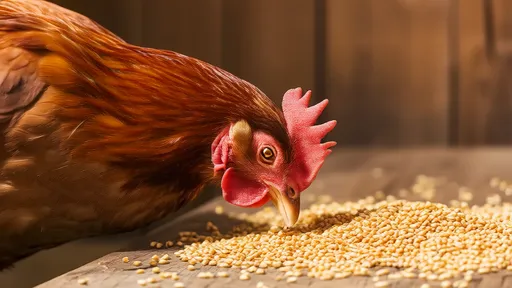
In the quiet hours of dawn, as the first light touches the treetops, a familiar sound echoes through the woods—the sharp, rhythmic tapping of a woodpecker drilling into tree bark. To the casual observer, it might seem like a simple search for insects, but this behavior represents one of nature’s most fascinating evolutionary puzzles: how do birds, entirely lacking teeth, process and digest hard, shell-encased foods? From finches cracking seeds to owls swallowing mice whole, birds have developed an array of sophisticated anatomical and physiological adaptations that allow them to thrive on diets that would challenge many toothed animals.
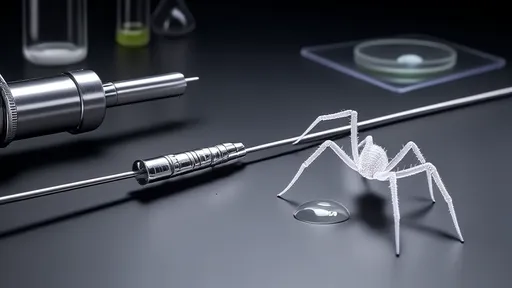
In the quiet corners of forests and the hidden eaves of barns, a master engineer works in silence, producing a material that has captivated scientists and engineers for decades. Spider silk, the unassuming product of one of nature's most prolific architects, possesses a combination of properties that modern science struggles to replicate. Its legendary strength, often poetically compared to being five times stronger than steel by weight, is merely the headline of a much deeper and more fascinating story of biological perfection.
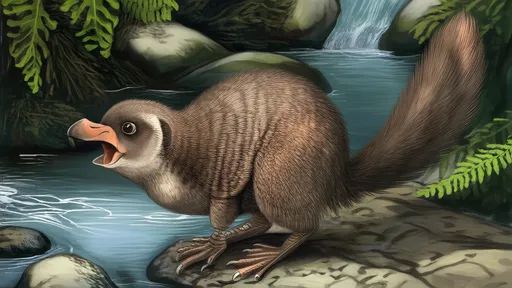
In the quiet waterways of eastern Australia, a creature that seems to defy categorization goes about its daily routine. The platypus, with its duck-like bill, beaver-like tail, and otter-like feet, has long fascinated scientists and laypeople alike. But perhaps its most astonishing feature is one that challenges the very definition of mammalian characteristics: it lays eggs. This peculiar trait, combined with its other unusual biological features, makes the platypus a living repository of evolutionary secrets, offering profound insights into the journey from reptilian ancestors to modern mammals.
The natural world has long captivated human imagination with its dazzling displays of bioluminescence, and among these living lanterns, fireflies hold a special place in both scientific inquiry and cultural fascination. Their ability to produce light through purely biochemical means represents one of nature’s most elegant energy conversion systems. The process by which fireflies transform chemical energy into visible light—a phenomenon known as bioluminescence—is not only a marvel of evolutionary adaptation but also a subject of intense research with implications spanning medicine, environmental science, and bioengineering.
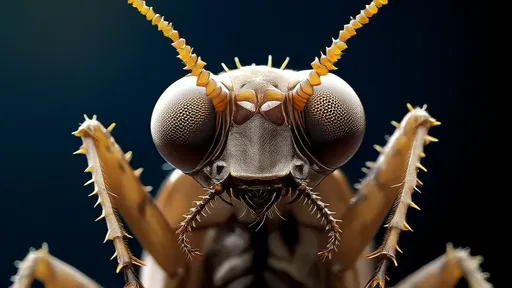
In the eternal battle between humans and household pests, few creatures have demonstrated such remarkable resilience as the common cockroach. These ancient insects have scurried across the planet for millions of years, outliving dinosaurs and surviving mass extinctions. Their continued presence in our homes, restaurants, and cities speaks to an evolutionary success story that both fascinates and frustrates scientists and exterminators alike.
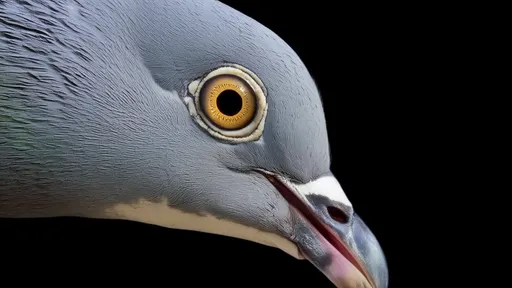
On overcast days when visual landmarks vanish beneath thick clouds, homing pigeons perform a navigational feat that has fascinated scientists for centuries. These remarkable birds can find their way home across hundreds of miles of unfamiliar terrain with uncanny precision. For decades, researchers suspected this ability was tied to Earth’s magnetic field, but the biological machinery behind this “built-in compass” remained one of nature’s most intriguing secrets.
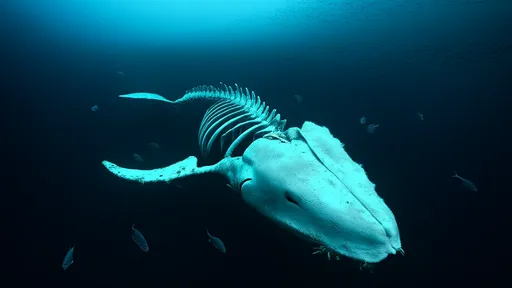
In the profound silence of the deep ocean, a remarkable event unfolds—one that begins with an ending. When a whale dies, its massive body descends through the water column, eventually coming to rest on the seafloor. This process, known as a "whale fall," initiates a complex and enduring ecological phenomenon that can sustain deep-sea life for decades, even centuries. Far from being a mere conclusion, the death of a whale marks the beginning of a vibrant, nutrient-rich oasis in an otherwise barren landscape.
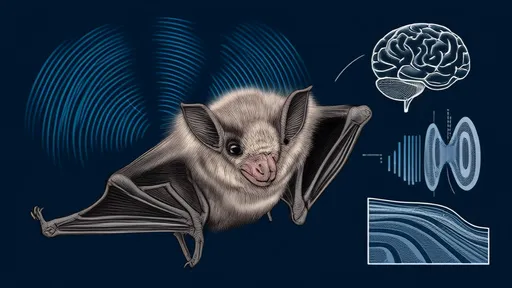
In the shadowy realms of night, where vision falters and darkness reigns, the bat has perfected a navigational art that defies human intuition. For centuries, these enigmatic creatures have sliced through the blackness with uncanny precision, hunting moths and avoiding obstacles with ease. Their secret lies not in superior eyesight, but in an auditory marvel known as echolocation—a biological sonar system that has captivated scientists and engineers alike. This natural innovation has become a cornerstone of biomimicry, inspiring technologies that range from medical imaging to autonomous vehicles. The story of how we have learned to listen to the bats is a testament to nature’s ingenuity and humanity’s relentless drive to innovate.
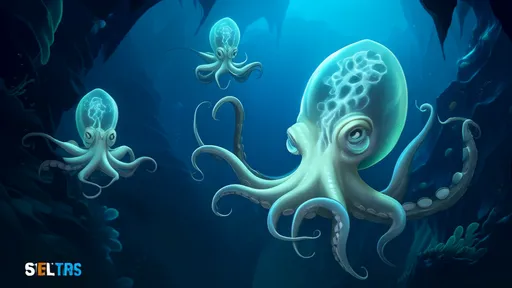
In the crushing darkness of the deep sea, where pressures defy human comprehension and light is but a distant memory, thrives one of Earth’s most enigmatic creatures: the octopus. With three hearts pumping blue, copper-rich blood and a distributed intelligence spread across nine brains, this alien-like being challenges our very understanding of consciousness, biology, and what it means to be intelligent. The mysteries held within its soft, boneless body may not only rewrite chapters of marine biology but could also force us to reconsider the possibilities of life—both on this planet and beyond.
The ancient wisdom of traditional medicine, passed down through generations of indigenous communities, now stands at a critical crossroads. As the world increasingly turns to natural and holistic approaches to health, the rich pharmacopeia of ethnic and tribal knowledge faces both unprecedented opportunity and existential threat. The protection of this traditional knowledge has become a matter of urgent global concern, particularly as it intersects with the rigorous demands of modern scientific validation.
The realm of biomaterials is witnessing a quiet revolution, one that draws inspiration not from synthetic laboratories but from the intricate designs of the natural world. For centuries, humanity has utilized animal-derived materials like leather, wool, and silk, valuing them for their durability, warmth, and beauty. However, the current wave of innovation moves far beyond these traditional applications. Scientists and engineers are now delving into the molecular and structural blueprints of various creatures, unlocking the secrets to materials with unprecedented properties. This is not merely about using what animals provide; it is about learning from millions of years of evolutionary engineering to create the next generation of advanced materials.
The ancient paradox of poison and medicine has fascinated healers and scientists for centuries. What makes a substance lethal in one context yet therapeutic in another? This question lies at the heart of toxin-based pharmaceutical research, a field that deliberately explores nature’s deadliest compounds as potential sources of life-saving treatments. From snake venoms to bacterial toxins, researchers are increasingly looking toward dangerous biological materials not as threats, but as reservoirs of molecular ingenuity that can be harnessed, repurposed, and transformed into novel medicines.
The marriage of biology and engineering has birthed one of the most transformative fields in modern medicine: biomedical devices inspired by nature's designs. This discipline, known as biomimetics or bio-inspired engineering, moves beyond simple imitation. It involves a deep study of biological structures, processes, and systems to create innovative solutions for complex medical challenges. From the intricate architecture of bone to the self-cleaning properties of lotus leaves, nature provides a masterclass in efficiency, resilience, and adaptability. Scientists and engineers are increasingly turning to these biological blueprints to develop the next generation of medical devices that are not only more effective but also more integrated with the human body.
In the vast and intricate tapestry of nature, animals have long served as a source of medicinal compounds, with their unique biochemical arsenals offering a treasure trove for pharmaceutical exploration. The pursuit of novel therapeutics from animal-derived natural compounds represents a fascinating intersection of biodiversity, biochemistry, and modern pharmacology. This field, while challenging, holds immense promise for addressing some of the most persistent human ailments, from chronic pain to antibiotic-resistant infections.
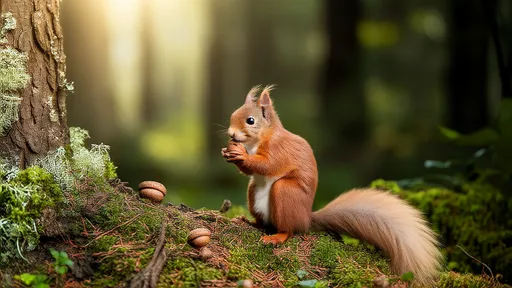
In the quiet of a forest, a small creature with a bushy tail scampers up an oak tree, its cheeks bulging with acorns. This everyday scene holds within it one of nature's most sophisticated ecological partnerships—the relationship between squirrels and the trees they help propagate. Far from being mere foragers, these agile mammals serve as unwitting foresters, participating in a complex system of seed dispersal that has shaped woodland ecosystems for millennia.
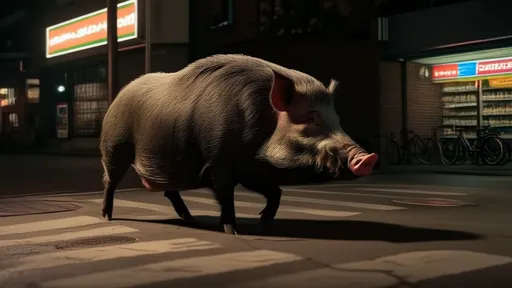
In the quiet hours before dawn, while most urban dwellers sleep, a surprising transformation occurs in cities across Europe and Asia. From Berlin to Tokyo, wild boars have begun venturing beyond their traditional woodland habitats, navigating subway tunnels, foraging in city parks, and even establishing residence in suburban neighborhoods. This remarkable adaptation represents one of the most fascinating cases of wildlife successfully exploiting human-modified environments.
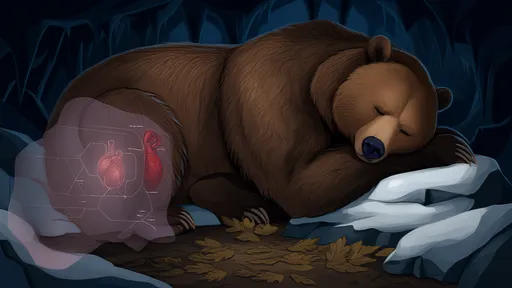
The profound stillness of a bear’s winter den belies a storm of physiological activity within. For centuries, the phenomenon of hibernation has captivated naturalists and scientists alike, not merely as a curious behavioral adaptation, but as a masterclass in metabolic regulation. The bear, a consummate hibernator, undergoes a suite of breathtaking physiological changes that allow it to endure months of fasting, immobility, and cold without succumbing to muscle wasting, bone loss, or metabolic disorders that would devastate a human. It is within this state of suspended animation that modern medicine is finding a treasure trove of insights, offering revolutionary clues for tackling some of humanity's most persistent health challenges.
In the dappled light of forest clearings and across the sweeping expanse of tundra, a silent communication network operates with breathtaking efficiency. This is the deer alarm system, a sophisticated web of signals that binds a herd together in a state of perpetual, shared awareness. Far more than just a collection of individuals, a herd of deer functions as a distributed sensory organ, with dozens of eyes, ears, and noses continuously scanning for threats. The survival of each member depends on the instantaneous and accurate relay of information through a language of posture, sound, and scent that is both nuanced and powerfully direct.
In the dense rainforests of West Africa, a remarkable scene unfolds as a community of chimpanzees gathers around a towering nut-bearing tree. An older female, her movements deliberate and practiced, selects a particularly hard-shelled nut, places it on a flat stone anvil, and with a well-worn hammer rock, cracks it open with precise force. Nearby, younger chimps observe intently, some attempting to mimic her technique with varying degrees of success. This transmission of nut-cracking skills from one generation to the next represents more than simple imitation—it is the living heartbeat of cultural tradition in our primate cousins.